
Your IT band is NOT too tight...it's this
I’ve been having this conversation a lot lately, so it’s time to set the record straight:
Your IT band is not too tight, my friend.
It doesn’t need to be “stretched out.”
And it's unlikely that any amount of foam rolling up and down your outer leg is going to fix that tense, ropey feeling.
What’s actually happening is that the fascia has become stuck to neighboring tissues (usually the quad or the hamstring).
Let me quickly break it down…
The IT band (iliotibial band) is a thick, dense strip of fascia that runs from your pelvis (via the TFL and glute max tendons) all the way down to the outside of your tibia (lateral knee). Its job is to:
Stabilize the hip and knee (knee rotation and femur external rotation)
Support walking, running, and cycling
Assist with lateral + dynamic movement
Transfer force between the hip and lower leg
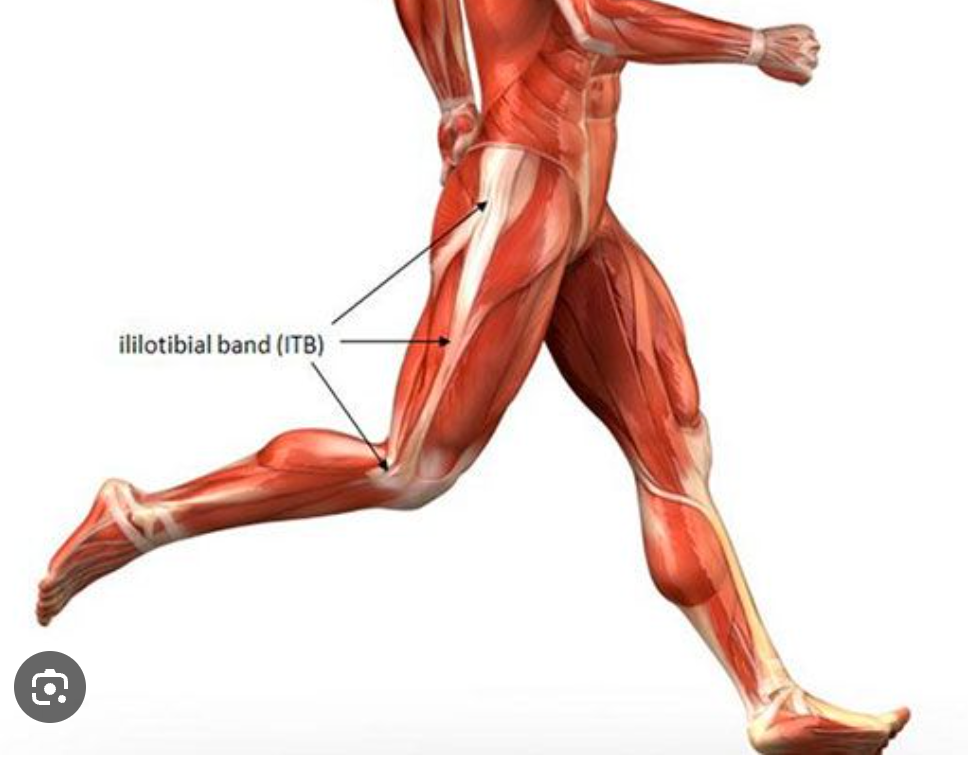
It is not a stretchy muscle. It’s not supposed to lengthen like your quads or hamstrings. It’s thick connective tissue that has a necessary (and critical) amount of tension in it in order to do its job of creating STABILITY. So, think of it more like a leather belt with more shock absorption/recoil properties.
When the IT band fascia is healthy, it glides smoothly over the quad and surrounding muscles with each step. But what often happens with inactivity, repetitive movements, or even stress, is the fascia of the IT band becomes sticky, glued down, or adhered to neighboring muscle and fascia tissue (usually Vastus Lateralis (lateral quad) and occasionally the hamstrings), and then it can no longer slide the way it’s supposed to. The result is that "tight band" sensation or pain.
Now that we know it's not a length issue, it's easier to understand why stretching it makes little sense AND why rolling up and down our outer leg often does nothing (and sometimes makes things worse). Your brain interprets aggressive lengthwise rolling or stretching as a threat to hip/knee stability, and can tighten things even more to protect you.
So what actually works?
You have to release the horizontal adhesions—where the IT band is stuck to the quad or hamstring.
That means:
Find a tight/sticky spot
Stay there
Bend and straighten the knee + move the heel in and out (shear across the fibers (cross-fibering), rather than rolling “with the grain”)
This perpendicular movement is what actually unsticks the IT band and restores proper glide.
I made you a quick video so you can try it yourself (including a few ways to make it less terrible).
Watch the IT Band Release Tutorial Here
This small change makes a HUGE difference—especially if you’re dealing with:
IT band syndrome Knee pain or stiffness Outer hip tightness Chronic IT band tension Even certain types of low back pain
So if you’ve been foam rolling your IT band for years and still feel tight… this is about to feel like sorcery in the best possible way.
Give it a try and let me know how it feels—I love hearing your wins (and your surprises).
Your hips and knees will thank you!
-
Because the issue is usually not length — it is glide. When the fascia of the IT band becomes stuck to neighboring tissues like the quad or hamstring, it can create that tense, ropey, restricted feeling. What often feels like “tightness” is really a loss of healthy movement between tissues.
-
Not really. The IT band is not a stretchy muscle — it is a thick, dense band of fascia that helps create stability through the hip and knee. Trying to stretch it usually does not address the actual problem and may even make the body tighten more in response.
-
Rolling aggressively up and down the outside of the leg often goes “with the grain” instead of helping release the adhesions that are limiting glide. In some cases, that kind of pressure can also feel threatening to the body and create even more guarding. This is why many people roll their IT band for years and still feel stuck.
-
What tends to work best is releasing the horizontal adhesions between the IT band and the tissues around it. This is usually done by finding a sticky spot, pausing there, and then using movement like bending and straightening the knee or moving the heel in and out to create a shearing effect across the fibers. That is what helps restore glide rather than just pressing on the area.
-
This approach can be helpful for IT band syndrome, outer hip tightness, knee pain or stiffness, and chronic tension along the outside of the leg. Because the IT band also plays an important role in lower body stability and force transfer, improving how it glides can sometimes even help with certain types of low back discomfort.
