
Unlocking Your Body's Wisdom: The Role of Fascia In Stress Relief
In the hustle and bustle of our daily lives, it's no secret that stress can take a toll on both our mental and physical well-being. Today, I wanted to share some quick insights into a fascinating aspect of our body that often bears the brunt of stress – our fascia.
Fascia is a complex network of connective tissue that surrounds muscles, organs, and all other structures in our body. Not only does it provide support and structure, but it also plays a crucial role in transmitting and interpreting signals. Fascia can communicate within itself, interacting with the nervous system while also responding directly to stress, movement, and sensation. It’s like a quantum super-highway that is constantly translating emotions, thoughts, movements, and experiences. Therefore, stress can manifest in our fascia, leading to tension, stiffness, and an overall sense of disconnection from our bodies.
If you’ve ever found yourself thinking in circles or feeling “stuck in your head” in an effort to solve life’s stresses, consider that often the fastest way to the mind is actually through the body.
Enter the world of somatics – a holistic approach to wellness that emphasizes the mind-body connection. Somatics recognizes that the way we experience stress and trauma is not just confined to our minds; it is also imprinted in our bodies. This is where fascia release becomes a powerful tool for grounding ourselves, reconnecting with our bodies, and fostering a sense of safety within.
By incorporating fascia release techniques into our routine, we can effectively release stored tension, soften the texture of our tissue, and enhance overall well-being. This is not just about physical health; it's a journey towards reclaiming the wisdom our bodies hold. As we release the grip of stress on our fascia, we create space for greater ease, presence, and resilience.
I invite you to start the process with this short, follow along video for releasing your core. These simple yet effective fascia release techniques are designed to improve your ability to breathe deeply, promote relaxation, and help you reconnect with the innate wisdom of your body. Simply click on the photo below.
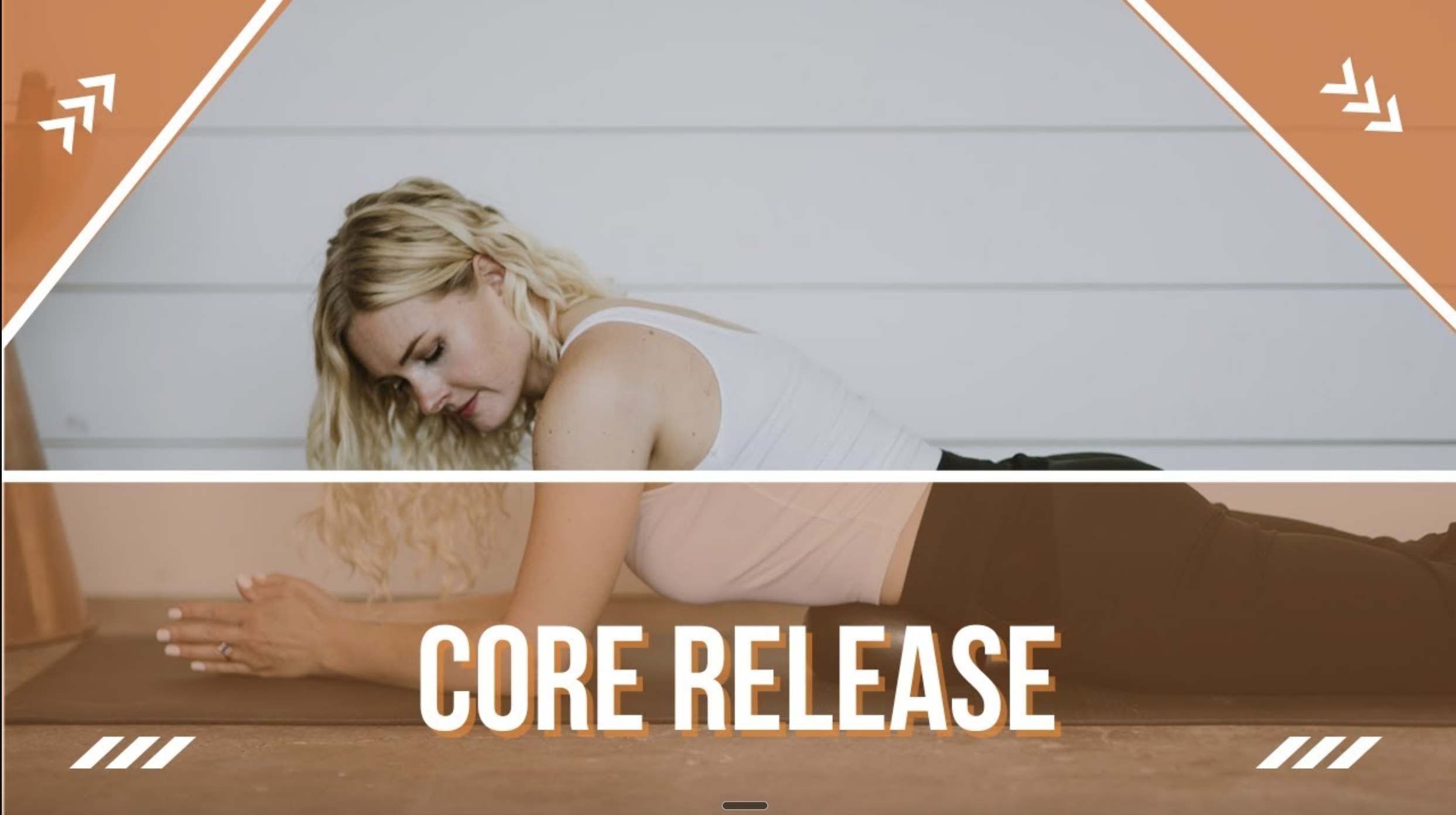
A quick note: If you find that any emotions come up during this routine or in the days that follow, know that it’s normal! Instead of fighting it, it’s ideal if you can let yourself feel that emotion all the way through so that it can move out of your body. If you don’t experience any emotions, that’s also normal and you’re still immensely helping your stress. (If you love this one and want more routines like this, please consider joining Roller Remedy, my online video library that has an entire section dedicated to stress relief).
Take a moment for yourself, prioritize your well-being, and explore the profound benefits of somatic practices. Your body has an incredible ability to heal and restore balance – all it needs is a little mindful attention.
Wishing you a journey of self-discovery and holistic well-being.
-
Fascia responds to stress by tightening, dehydrating, and losing its natural elasticity. Emotional stress, trauma, and chronic tension can all influence the fascial system, leading to stiffness, discomfort, and a feeling of being disconnected from the body. Over time, this stored tension can impact both physical movement and emotional regulation.
-
Yes. Fascia release can help reduce stress and anxiety by improving breathing mechanics, unlocking restriction in areas that tend to get stuck in long-term holding patterns, and restoring movement to tissues that have been under chronic load. Fascia is rich in sensory receptors—more than any other tissue in the body—so working intelligently with fascia influences how the body processes sensation, emotion, and internal signals. The right release techniques can help move built-up tension and energy, improve breathing, and support the body’s ability to shift out of a constant fight-or-flight state.
-
Fascia work isn’t traditionally labeled as “energy work,” but it absolutely influences the body’s energetic and emotional landscape.
Fascia is a living, responsive tissue that transmits force, sensation, and information throughout the body. It’s rich in sensory receptors and deeply involved in how we perceive safety, stress, and internal states. When fascia becomes restricted or stuck in long-term holding patterns, it doesn’t just limit movement — it can also affect how energy, emotion, and sensation move through the body.
Fascia release works by applying precise compression and movement to restore space, hydration, and responsiveness to this system. As restriction softens, people often notice shifts that go beyond the physical: changes in breathing, emotional release, a sense of grounding, or feeling more “at home” in their body.
So while this work is mechanical, structural, and highly intentional, it often has energetic effects. Not because we’re trying to manipulate energy directly, but because when the body’s communication systems are supported, everything flows more freely — including how we process stress, emotion, and experience.
-
Somatics recognizes that stress and trauma are not only mental experiences but are also stored in the body. Fascia plays a key role in this process because it responds to emotional and physical experiences via its receptor rich communication network. Fascia release can support somatic healing by helping reconnect you to sensation in the body, (more presence typically helps you feel more safe, grounded, and relaxed).
-
Emotions can surface during fascia release because this work directly affects tissues involved in stress response and regulation. As tension softens and the body feels safer, stored emotional patterns may release. This is a normal response and doesn’t happen to everyone, but when it does, it’s often part of the body’s natural processing.
-
Core fascia release can improve breathing and relaxation by reducing restriction around the diaphragm, ribs, and abdominal tissues. When these areas are more hydrated and mobile, breathing becomes deeper and more efficient, which supports nervous system regulation and overall stress resilience.
