
Lose the bloat + strengthen your immune system!
Now, let’s switch gears and talk about something most people rarely connect to fascia: your lymphatic system. Think of it as your body’s built-in detox and immune filter—flowing right through your superficial fascia.
Here are the important bullet points:
Your lymphatic system is a part of your immune system and lives in your superficial fascia (the layer right under your skin).
It's a collection of nodes and pathways that run lymph fluid through them like a low running garden hose throughout the body
It gathers excess fluid from your tissues, filters out waste, fights infections, helps control swelling, and keeps fluid levels balanced.
Now, imagine your fascia like a vacuum seal bag for a moment. When your fascia is tight or restricted, it's like we're slowly sucking air out of that bag, compressing everything inside of it. Naturally, this is going to put "kinks" in the hose of your lymphatic system.
The result? Fluid becomes stagnant (gross). Toxins can't be removed. Your body ends up holding onto fluid, you feel swollen or bloated, immune function is less efficient, and inflammation can creep in.
Yes, strategic fascia release (The Fascia Remedy way) will help "let the air back in." But, here are a few other tried and true tactics I love that you can use to improve your lymph function:
Dry brushing
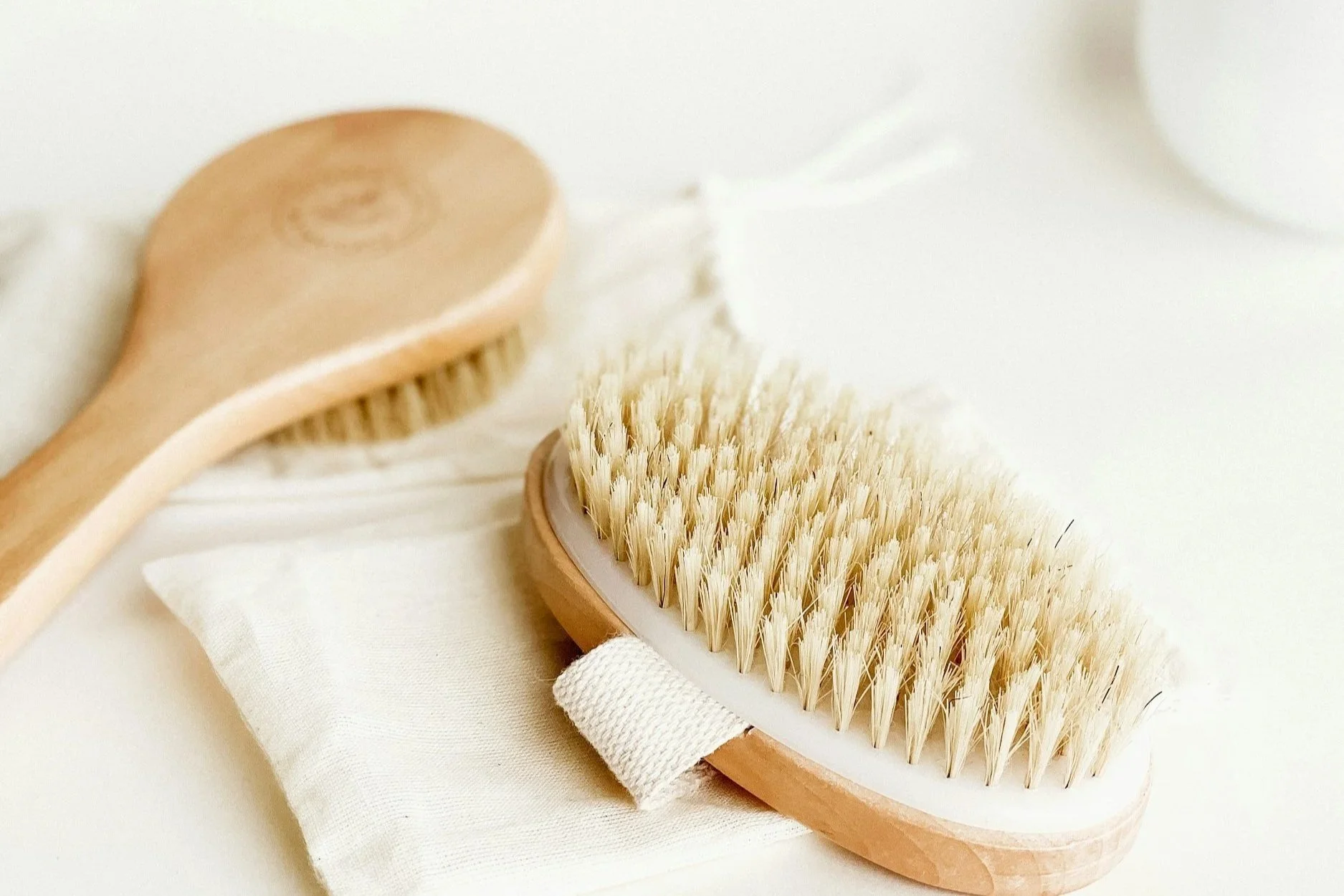
Dry brushing is a gentle, accessible tool to help the superficial fascia + lymph work together better. It won’t fix everything, but it’s one of those small wins that adds up—especially when fascia is healthy everywhere else.
Some of the benefits:
Helps stimulate circulation and lymph flow, potentially reducing swelling, fluid retention, puffiness.
Exfoliates skin and increases skin radiance
Can feel invigorating—activating the nervous system nicely. (It’s a bit like a wake-up call for your superficial tissue.)
How to dry brush properly
Here are the how-tos so you're not just brushing for the sake of it:
Use a natural bristle brush (skin should be dry).
Always brush toward the nearest lymph node. For example, from legs → groin, arms → armpits, torso → chest/neck.
Keep strokes gentle—no scrubbing or hard pressure needed.
Best time is just before showering, or as part of your morning or evening routine. Even just 5-10 minutes makes a huge impact!
Don’t brush over irritated skin, acne breakouts, cuts, or rashes. If you experience irritation, let skin rest and maybe switch to a softer brush or simply your hands (like a very gentle massage).
Clean your brush weekly. Mild soap + warm water, let it fully dry. Replace when bristles get stiff or worn.
Other lymph-support tools & habits
You can also try:
Gua sha: That flat, stone tool works beautifully on the face/neck. Similar to dry brushing, just slowly and gently glide toward the nearest lymph node.
The Big 6 Reset: Dr. Perry Nickelston—one of my favorite lymph educators—teaches a simple daily routine called the Big 6 Lymphatic Reset. You can find it on YouTube.
Movement & Rebounding: Our lymph and fascia work like an aquarium pump—movement gets fluids pumping and the “filter” running. Whether it's a leisurely walk or an a harder workout, movement helps support our lymph flow. A rebounder (those cute mini trampolines) is also fantastic: just bounce gently for a few minutes. Your toes don’t even have to leave the rebounder!
Let me know which one you like or if there's another way you've been supporting your lymphatic system! I always love hearing from you
-
Yes. Because the lymphatic system runs through the superficial fascia, restricted fascia can make fluid movement less efficient. Strategic fascia release may help improve lymphatic flow, reduce stagnation, and support the body in moving excess fluid more effectively.
-
The lymphatic system helps collect excess fluid, remove waste, and support healthy fluid balance in the body. When lymph flow becomes sluggish, fluid can build up in the tissues, which may contribute to puffiness, swelling, and that bloated feeling.
-
Dry brushing may help stimulate circulation and support lymph movement, especially when done gently and in the direction of the nearest lymph nodes. It can also help reduce puffiness, support the superficial fascia, and leave the skin feeling more refreshed.
-
Some of the most effective natural lymphatic support tools include fascia release, dry brushing, gua sha, walking, rebounding, and other forms of regular movement. These practices can help keep fluids moving, support circulation, and promote healthier tissue function.
-
Yes. The lymphatic system is an important part of the immune system and helps filter waste, fight infection, and move fluid through the body. When lymph flow is sluggish, the body may be less efficient at clearing waste and maintaining healthy immune support.
