
My BEST Halloween costume
So… my best Halloween costume of all time?
An elephant.
More specifically—the elephant in the room.
I wore a giant furry hat with the big ears and a trunk, gray sweats stuffed with pillows, and fully committed to the bit. I spent the night quietly standing in corners and awkwardly lingering in circles of people until someone finally acknowledged my existence. I even photobombed every group picture I could like a true professional.
Please see Exhibit A:
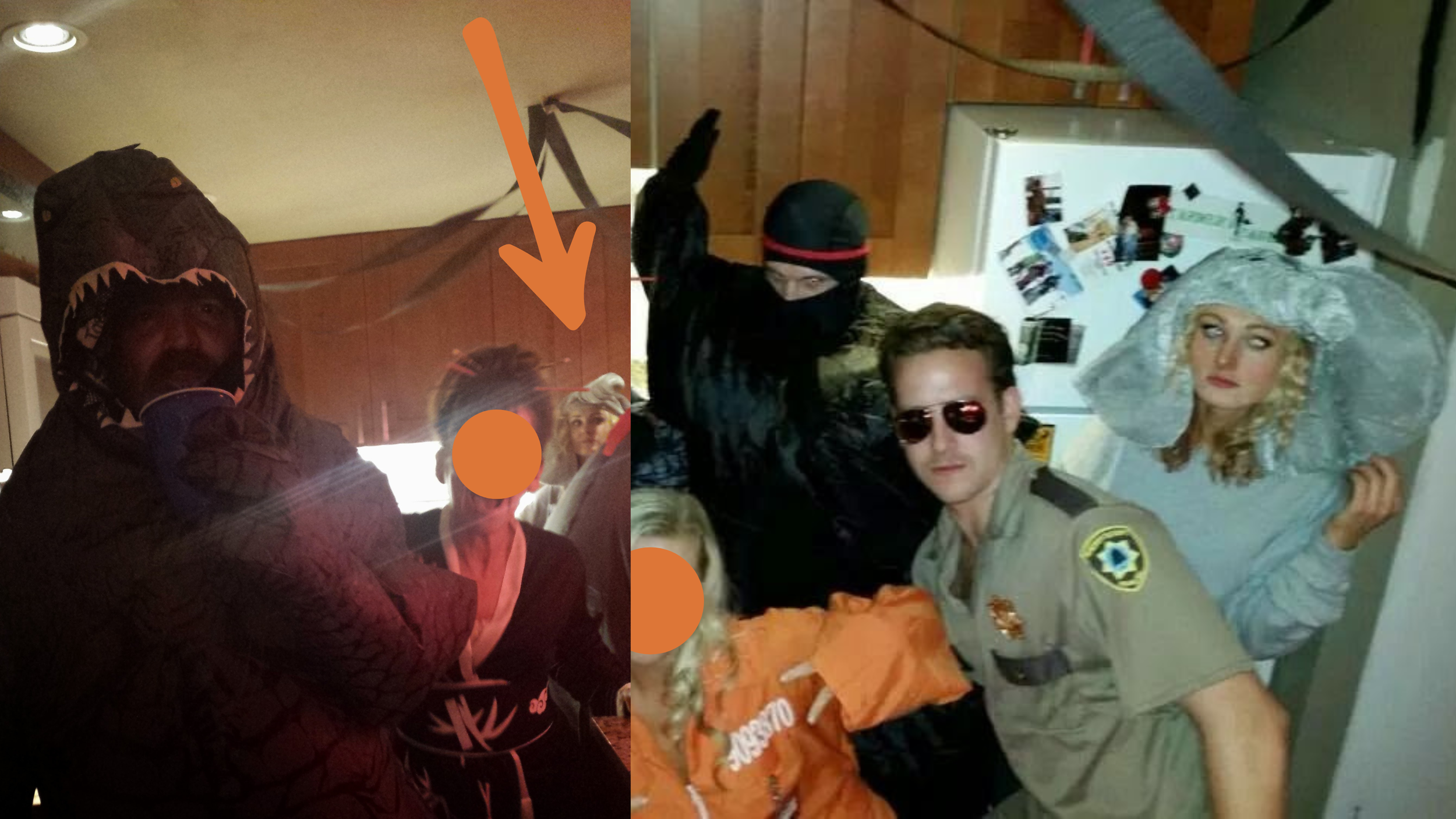
Side note: What’s your best Halloween costume ever? Hit reply and tell me—I could use some ideas for next year.
But since we’re on the topic… let’s talk about a much more serious elephant in the room.
We are in a FULL-BLOWN pain epidemic, friends.
1 in 4 people (that's 52 MILLION people) in the U.S. alone reported experiencing chronic pain in 2021.
Pharmaceuticals, surgeries, disability, and pain related treatments cost us over $600 BILLION dollarsa year.
And yet, despite more options—more prescriptions, cortisone shots, surgeries, and treatments—pain rates keep rising.
So what gives?
Here’s the thing most people (and most systems) miss:
We’re not looking in the right places—and we’re not talking to the right systems.
Most people chase pain in the spot they feel it—like rubbing their back, stretching their hamstrings, or cracking their neck. But as I'm sure you're tired of me reminding you: where we feel pain is rarely ever the real problem. It’s just the messenger.
And while muscles and joints get all the attention (and all the blame), they’re not actually the ones calling the shots. They’re simply reacting to the information coming from the body’s communication systems—your fascial system and your nervous system.
The reality is your body can’t tell the difference between a real physical threat (like slipping on ice) and a perceived one (like a stressful job or unresolved emotions). The body still braces, tightens, protects—and that tension gets stored in your fascia, your posture, and your movement patterns over time.
If we really want to end pain (not just chase it), we have to work with these systems directly, and in the right areas.
That’s exactly what we’re doing in the NeuroFascia Integration Series.
This next session is all about the feet and ankles — the foundation of how your body moves and balances. We’ll be combining targeted fascia release with gentle, nervous-system rewiring movements that retrain your body to feel safe, supported, and strong.
Perfect if you’ve ever dealt with:
Foot pain or plantar fasciitis
Tight calves or ankle mobility issues
Repeated ankle sprains
Or even hip and low back tightness that never seems to go away
What’s amazing is that even though we’ll be working on just the lower legs, the results ripple all the way up the chain.
You can join the full three-part series (everything’s recorded and yours for life).
Let’s finally address the real elephant in the room—and give your body the reset it’s been asking for. Hope to see you there!
-
Chronic pain has become incredibly common because most people are under constant physical, mental, and emotional stress. The body responds to all of that by bracing, tightening, and creating protective patterns over time. When those patterns are not addressed at the level of the fascia and nervous system, pain often becomes chronic.
-
Pain often returns when only the symptom is treated instead of the underlying cause. Many people focus only on the place that hurts, but the real issue may be coming from movement patterns, compensation, fascial restriction, or nervous system overload elsewhere in the body. If the root cause is not addressed, the body usually keeps repeating the same pain pattern.
-
Yes. The body does not always distinguish well between a physical threat and an emotional one. Stress, overwhelm, and unresolved emotions can create tension, guarding, and protective movement patterns that get stored in the fascia and nervous system, eventually contributing to real physical discomfort.
-
Absolutely. The feet and ankles are the foundation of how the body moves, balances, and absorbs force. When there is restriction, instability, or poor mechanics there, the effects often travel up the chain and can contribute to tight calves, knee pain, hip tension, and even low back discomfort.
-
Yes. Fascia release can help improve tissue glide, hydration, circulation, and movement in the feet and lower legs. When combined with nervous-system-based movement work, it can be especially helpful for people dealing with plantar fasciitis, repeated ankle sprains, tight calves, or limited ankle mobility.
